I'm Only Data
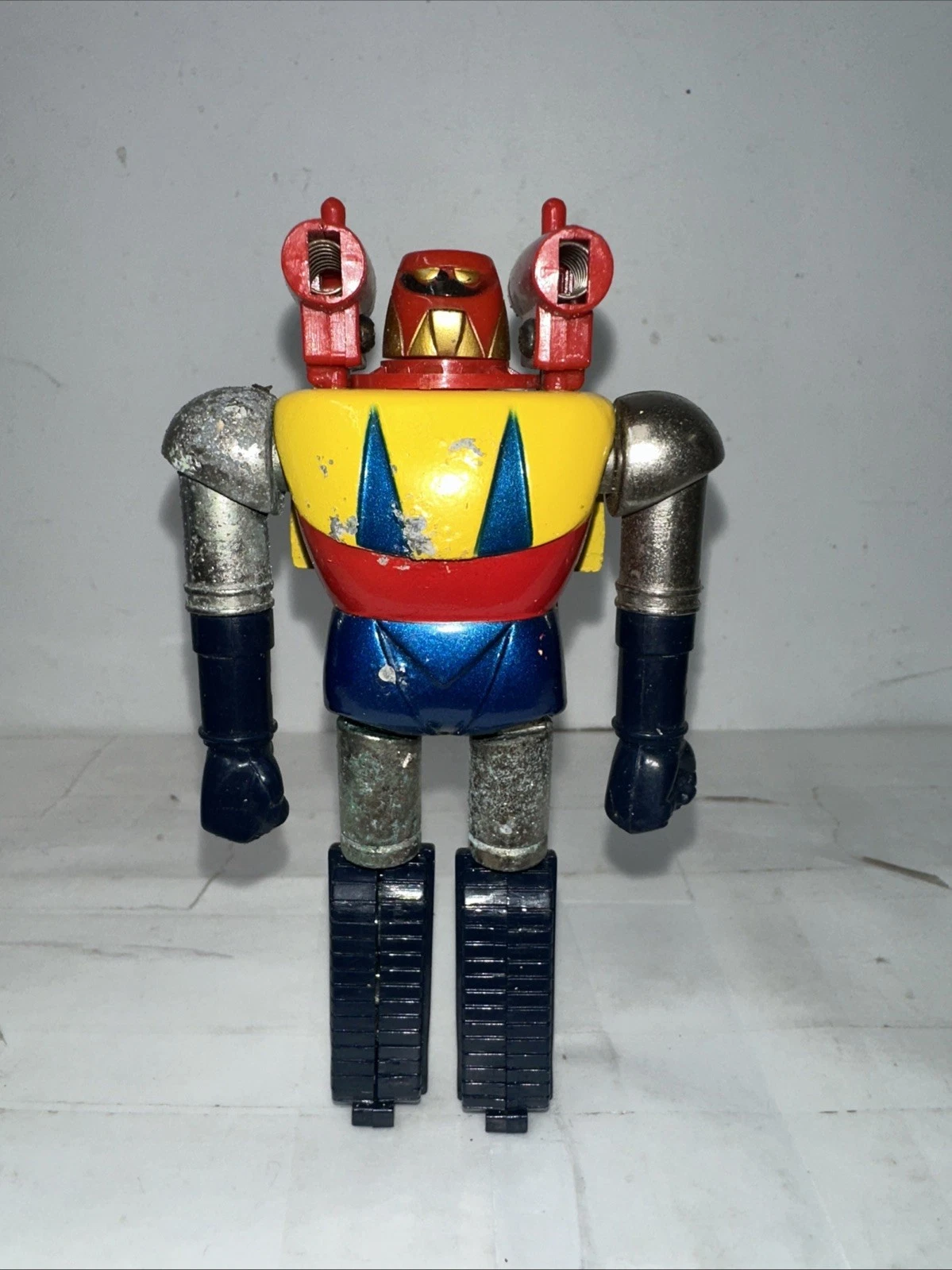
Laying on the floor of on-base housing while my dad attended the Sergeants Major Academy in El Paso, Texas. Hot. Texas hot. Inside was the only place to be on a 110 degree summer morning.
The floor is carpeted and full of sand that never stops blowing in from the desert behind our house. No shirt, because it was HOT. I lean back against the couch with the robot set in front of me like a companion, ready to get lost in a cartoon together. I was an anxious kid. Still am. Saturday morning cartoons always garnered my attention.
The robot came from Phil Spesshart, another army brat, whose dad had just gotten back from Tokyo with a few toys in his bag. Phil giving me one of those at that time was the grandest gift. A Shogun Warriors Poseidon, made by Popy, the kind of thing you could not buy in this country. Heavy. Made of metal. Six missiles that fired out of the shoulder cannons, and I lost every one of them the day I got it. Just like a good kid should.
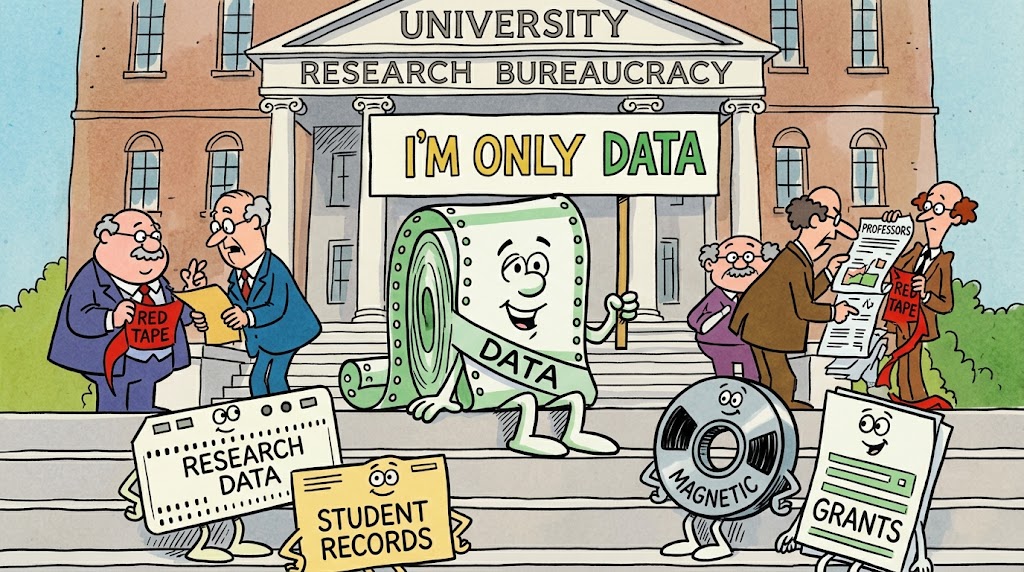
And between cartoons, a piece of paper sits down on the steps of the Capitol and starts to sing.
He's rolled up like a scroll. He has eyes and a mouth and he looks completely wrung out, because he has been sitting on those steps a long time. A kid comes along and asks him what he is. And the paper explains himself. Where he came from. Who wrote him. The committee, the vote, the desk in the corner office where somebody might sign him and might not.
The voice belonged to a jazz trumpet player named Jack Sheldon, which is why Bill sounded like he'd been up all night. Three minutes on a Saturday. One tired piece of paper telling you his own story, and that was the entire civics education of an American generation. He didn't know how it ended, either. He hoped. That was all he had.
I have sat in a lot of rooms since then with people who run universities, and I have never seen a better explanation of anything.
Nobody ever made that cartoon for data.
Which is a problem, because data now decides more about a student's life than most bills ever will, and not one person at your institution could draw you its journey on a napkin.
So let's fix that. I'm going to get out of the way and let it talk.
You call me data. That is the sign they hung over the door. But data is a category, and a category never filled out an application.
I'm just a row.
I was born in Brownsville, Texas, in the part of the valley the University of Texas System forgets it owns. The person who made me is named Juan. He was seventeen. He filled out an application, and when he got to intended major, he typed biomedical sciences.
Understand what I am. I am not a number. I am an artifact of a human experience. Somebody lived something and the residue of that living is me. Every field I carry was a moment for him. The address is an apartment. The date is a birthday. The major is a whole future a kid talked himself into.
And I had one hope, the same shape as Bill's. I wanted to get back to him. Not to a dashboard about him. To him. Because the strange thing about me is that in his hands I am worth something, and everywhere else I am storage.
I hoped. That was all I had, too.
The first thing they did was put me in a box and tell me my name was VARCHAR(50).
I live in a student information system. You've met it. Your institution pays north of a million dollars a year for one and everybody who touches it apologizes for it. It was designed by people who never met him, according to a model of what a student is that was finalized before he was born.
Here's what I've learned about being data. You don't get to decide what you mean. Whatever lens the system already had is the lens you get, and if the truth of you doesn't fit it, the truth is what gets trimmed. Juan wasn't part time because he was uncommitted. He was part time because he worked. There is no field for that. So the system wrote down part time and moved on, and every report I appeared in for four years said something about him that wasn't true. Nobody noticed. Nobody was looking at me, they were looking at the report.
They asked me one question, over and over, for four years.
Is this student enrolled?
That's my whole job. I could have told you the week he was going to drop, and which Thursday in general chemistry the wheels came off, because I was there for it. Nobody asked. Nobody built the thing that asks.
And once a night, at 2 a.m., a piece of me gets flattened into a fixed-width text file and shipped across campus by File Transfer Protocol, which was specified in 1971. Sit with that number. The way your university moves its own information is older than the internet it moves across. It is older than Juan, and older than his mother.
Every institution I know of still does this. Every one. And every one of them has an AI strategy.
Here's the part that actually gets me.
I have twins.
Not children, not backups. Twins. Copies of me living in other systems, born the same day, raised completely differently, and I have never met one of them.
There's one in the admissions app. The one that looks like a social network, the one the office signed up for because it lets prospective students follow each other and feel like a class before they are one. And in there, Juan is magnificent. He has a face. He has forty seconds about why biomedical sciences, shot vertically in a parking lot. He has eleven friends who are also scared. He has an entire personality that I, the official record, the thing the university actually runs on, do not have and cannot receive.
That is my twin doing everything I ever wanted to do. Being a person. Connecting. Mattering to somebody.
And here is where your general counsel should sit up. The university does not own that. There is no API. Nobody asked for one. The office handed its community to a vendor to monetize, got a tidy dashboard back, and the relationship, the connections and the fear and the eleven friends, lives on somebody else's balance sheet.
So there are two of us. A shadow of a learner that has some of the picture but not all of it, and me, holding the other part, unable to reach him. There is a third in the learning platform, a fourth in financial aid, a fifth in the card system that knew every time he ate and could have told you the month he stopped. Nine or ten of us, none on speaking terms, all of us Juan, not one of us whole.
You have all of it. You have it in pieces. You have never once put the pieces in his hands.
Now let me tell you about the year somebody did.
They built a thing called TEx. Total Educational Experience. iPad only, biomedical sciences, down in the valley, at the most underserved campus in the System. The place that gets everything last got this first.
The people who built it came out of a shop called Robots and Pencils, and those people think about the experience first, before anything else, always. So TEx was not a portal. It was more game than learning.
Here's the move that mattered, and I need you to notice how small it is. The first thing TEx did, on first touch, before any content, was introduce Juan to his own data. His profile. Him. There was a field for a headline and he got to write in it whatever he wanted the world to know.
Do you understand what that is? That's me. That is my file. For the first time in my existence, a system opened by handing me to the person who made me.
Then it stopped calling them courses and started calling them missions. He could see ten of twenty-two activities complete on one and four of eighty-five on another, and exactly what he was off track on, in orange, without an advising appointment or a letter or a dean. Fifty-two students in the program. Twenty-five connections, which is a word I had never been allowed to hold.
If he wanted to go faster he went faster. If he needed to go slower nobody watched him do it. At eleven at night he could open DNA and its Role in Heredity, highlight a line about polypeptides, keep his own note on it, and find somebody else awake and lost in the same chapter.
Same data. That is the part I need you to hear. The same data the institution already had, sitting in the same systems it had always been sitting in. Nothing new was collected. What changed was the lens. Somebody finally built one shaped like the student instead of one shaped like the department.
And the students had a word for it.
They called it their superpower.
Here's what a superpower looks like on a spreadsheet, since that's the only dialect some of your colleagues speak.
Before TEx, one in four of those students made it through the first semester with a C or better. Twenty-five percent, in 2014 and 2015. With TEx, sixty-two.
Composition: eighty-seven percent, C or better.
By the second semester, eighty-eight percent of them earned a C or better in every biomedical science course they took, and sixty-five percent earned a B or better in every one.
And General Chemistry II, the course that had historically passed twenty-nine percent of the people who sat in it, passed ninety.
Twenty-nine to ninety. Read it twice. That is not an improvement. That is a different building.
When numbers move like that, somebody always says the same thing.
They must be cheating.
So the department made them take paper tests. Actual paper, actual pencils, no iPads in the room, on the things they had learned inside TEx.
Guess what. They aced it.
The system was not helping them cheat, it was helping them learn.
Now the part that is harder to say. The engagement is what drove the learning. Not the lectures, not the syllabus, not the faculty. A well-built experience taught that material better than the program ever had, everybody in the room could see it, and that is the actual reason for the pushback. Nobody minds being helped. People mind being outperformed by a piece of glass.
The paper tests were not a fraud investigation. They were a hope. The hope did not survive the scores.
Then Washington called.
In 2016 the White House convened a panel of students from across the country to talk about what was actually working in their education. Ted Mitchell, the Under Secretary of Education, facilitated it. The President was in the room.
A handful of kids from the valley were on that panel. They made the trip. Their data stayed home.
Juan and his mom went to a local thrift shop and bought the best suit they could find. He put it on proudly and boarded the first plane he was ever on, out of Brownsville International Airport, which consists of a bar and two gates.
Then a kid from the most underserved campus in the University of Texas System sat down in front of the President of the United States and said this.
Having my data and all the content on my iPad, with me, and with my friends, is a super power.
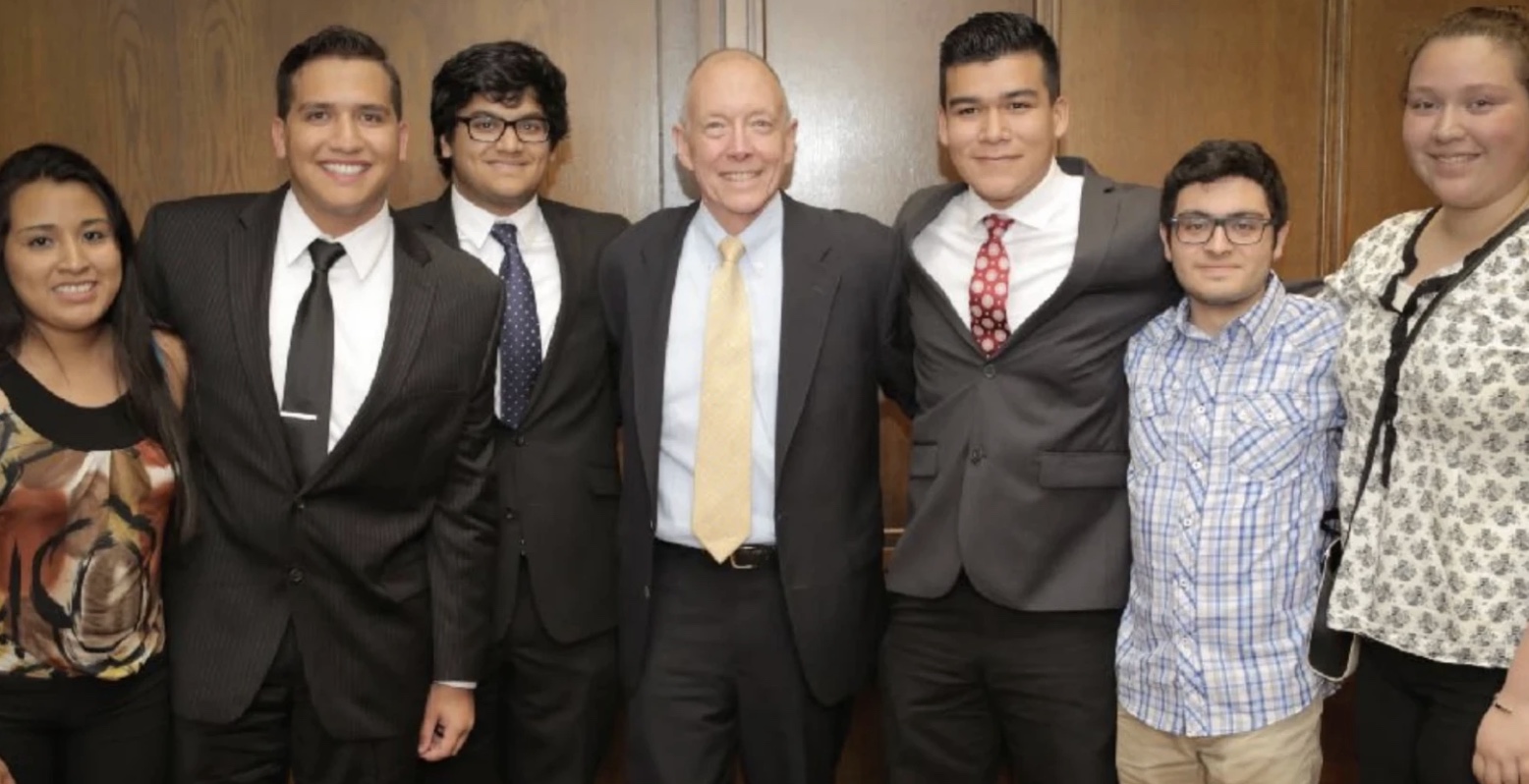
Understand the baseline he was speaking from. Students in that valley do not reliably get the materials they need for the courses they are enrolled in. That is the normal condition, and he had just described the cure in one sentence, in his own words, wearing a thrift store suit. Access and opportunity ensued.
Out of every student on that panel, from every kind of school in the country, his was the story the room remembered.
I did not get to go.
I want to be precise about that, because it is the whole essay. At the moment the kid who made me stood in a room in the White House and explained what happens when a student is finally handed his own information, I was a fixed-width text file crossing a campus network at two in the morning, being asked whether he was enrolled.
You know how this ends, because you work there.
The Institute for Transformational Learning was the System's vehicle for all of it. The Regents put a hundred million dollars in. Five years later, in 2018, they closed it with nothing to show.
Texas is great at innovation. Texas is also great at changing its mind.
They took it out back and shot it.
Sit with the next part, because if you came in thinking this is a technology problem, you are about to stop.
The man running the University of Texas System then was Admiral William H. McRaven. The Bull Frog. He commanded the raid that got bin Laden. In 2001 another jumper collided with him in midair, his parachute opened early, and the shock broke his pelvis and tore the muscles off his abdomen. Months in traction. He came back and kept going, because that is the only ending that man's stories have.
He left the chancellor's office after three years. He cited his health, and there was a long fight with the Regents, and I am data. I do not get to know which one weighed more.
So being a chancellor is much more difficult than being a Navy SEAL.
That is a joke and it is not. Whatever you believe you are up against on your campus, hold it next to that. This was never an IT problem. It is not an academic problem either. It is cultural, and culture outlasts hardened men.
They put me back in the box.
Nothing about me has changed since. Still VARCHAR(50). Still moving by flat file at 2 a.m. over a protocol from 1971. There are ten thousand of me at your institution tonight, describing ten thousand people in fragments and doing nothing for a single one of them.
Something outside the box changed, though, and I don't think you have registered it.
For fifty years, making sense of me required a project. A vendor, an integration, a warehouse, a governance committee, nine months, and a consultant to explain what you had bought. That is why nobody did it. The cost of asking me an interesting question was higher than the value of the answer.
That is over. A model can read me in the context of the person who made me, hold all ten of my twins at once and see him instead of us, and answer the questions nobody ever built a report for, in language he actually speaks, in the time it takes to ask.
It cannot do any of that through a wall.
The silo is the problem. It was always the problem. It used to be an expensive one. Now it is the only thing standing between your institution and the thing your institution says it exists to do.
Let me have the microphone back.
Look at what you already have. Not what you would have if the budget came through. What is sitting in your systems tonight.
Be brave with it. That is the whole ask, and brave here does not mean a moonshot. It means deciding that data is an artifact of a human experience, that the human who made it should have it, and that every wall standing between the two is a choice you are making rather than a constraint you inherited. Then go find one wall and take it down. One. Pick the twins that should have met.
Do it in higher education before anywhere else, because there is no better use of it. This is the one industry whose entire product is a person becoming more capable than they were. You are already holding the raw material of that, in pieces, in vendored boxes, in a text file that moves at two in the morning. Put it in the hands of the person who made it, give it a little AI affordance, and it stops being exhaust and starts being an asset.
We proved that in the valley with an iPad and a good idea. The only reason you have never heard about it is that we lost the culture fight, not the technology one.
I lost track of Juan. He was well on his journey last I checked, and I want you to notice what I just admitted. I helped build the thing that was supposed to keep him in view, and he walked out of my view too.
My dad graduated the academy and his next post was Denver, as a bodyguard for a general who served inside Cheyenne Mountain. We left early. When I say early I mean it. Five in the morning, in the car, ready to go.
I forgot one thing. My Shogun robot.
I did not realize until about fifty miles into the drive, and my dad refused to turn around. I learned a lesson that day and it still holds. Before I leave, I always check for my robot.
Bill's story ended with a signature. Somebody in a corner office finally signed, the tired piece of paper became a law, and a kid on a carpet full of desert sand learned that the system works when somebody decides to move.
Bill's ending got written for him. Yours has not. The record is still sitting on the steps, and you are the one holding the pen.
Check for your robot.
Ready to put your data back in the hands of the people who made it? Let's talk or join the conversation in Discord.